The Best State-of-the-Art Object Detection Models in 2025: A Guide for Developers
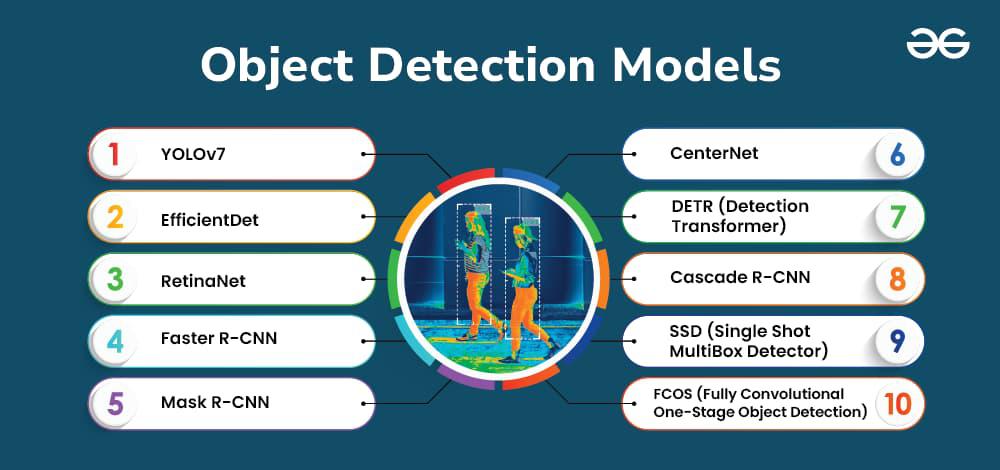
Object detection has become a cornerstone of computer vision applications, from autonomous driving to retail analytics and augmented reality. Choosing the right model for your project can feel overwhelming with the rapid advancements in deep learning. This guide will walk you through the best state-of-the-art (SOA) object detection models in 2025, highlighting their strengths and use cases.
If you're interested in innovative applications of object detection, sign up for the FYNDIT AI beta to experience next-generation object tracking solutions or take our Customer Stories Survey to help shape our product.
What is Object Detection?
Object detection combines classification (what is in the image) with localization (where the object is in the image). It outputs bounding boxes around detected objects and labels them. Modern object detection models are powered by deep learning, leveraging neural networks trained on massive datasets.
The Top Object Detection Models in 2025
1. YOLOv8
- Overview: The "You Only Look Once" (YOLO) series continues to dominate object detection. YOLOv8 builds on its predecessors with improved speed and accuracy.
- Key Features:
- Extremely lightweight and optimized for edge devices.
- Superior performance in real-time detection tasks.
- Enhanced modularity for training custom datasets.
- Best For: Mobile applications, robotics, and scenarios requiring real-time detection.
- Resources:
- GitHub: YOLOv8 Repository
Visual Tip: Show a side-by-side performance comparison chart of YOLOv8 vs. earlier YOLO models (e.g., FPS and mAP scores).
2. Grounding DINO
- Overview: Grounding DINO bridges object detection with natural language processing (NLP), allowing text-to-object matching in images.
- Key Features:
- Combines detection with open-vocabulary capabilities.
- Effective for applications requiring precise understanding of context (e.g., identifying "red chair" vs. "chair").
- Seamlessly integrates with vision-language models like CLIP.
- Best For: E-commerce, content moderation, and augmented reality.
- Resources:
- Hugging Face: Grounding DINO
Visual Tip: Include a diagram of how Grounding DINO pairs text prompts with bounding boxes.
3. Detectron2
- Overview: Developed by Meta (formerly Facebook), Detectron2 is a robust library for object detection and segmentation.
- Key Features:
- Modular and highly customizable for research purposes.
- Supports multiple architectures, including Faster R-CNN and Mask R-CNN.
- Excellent for dense object detection tasks.
- Best For: Academic research, custom implementations, and production pipelines requiring flexibility.
- Resources:
- GitHub: Detectron2
4. Vision Transformers (ViTDet)
- Overview: Transformers have revolutionized NLP, and now they're making waves in vision tasks. Vision Transformers (ViTs) are becoming increasingly popular for object detection.
- Key Features:
- Superior performance on large-scale datasets.
- Scalability with pre-trained weights for transfer learning.
- Integrates seamlessly with models like DINO and Swin Transformer.
- Best For: Large-scale projects requiring fine-grained detection.
- Resources:
- GitHub: Vision Transformers
Visual Tip: Add an example of ViT's self-attention map to showcase how it "sees" objects.
5. EfficientDet
- Overview: Known for balancing accuracy and efficiency, EfficientDet is ideal for resource-constrained environments.
- Key Features:
- Uses EfficientNet as a backbone for speed and accuracy.
- Scales seamlessly across different hardware setups.
- Offers state-of-the-art performance on benchmark datasets.
- Best For: Edge devices and IoT applications.
- Resources:
- GitHub: EfficientDet
How to Choose the Right Model
- Speed vs. Accuracy: If real-time detection is critical, go with YOLOv8 or EfficientDet. For high accuracy, consider Detectron2 or Vision Transformers.
- Scalability: Planning to scale across hardware? EfficientDet or YOLOv8 are excellent choices.
- Use Case Complexity: For text-to-object matching or detailed segmentation, explore Grounding DINO or Detectron2.
Visual Tip: Include a flowchart that helps readers pick the best model based on their needs.
Applications of Object Detection in Real Life
- Retail: Automatic checkout systems identifying products in a shopping cart.
- Healthcare: Detecting abnormalities in medical scans.
- Smart Cities: Monitoring traffic and identifying accidents.
Why Object Detection Matters for You
At FYNDIT AI, we’re developing next-generation object tracking solutions that build on the capabilities of these models. Whether you’re a developer, a business owner, or just curious about the potential of AI, we’d love to hear from you.
Take Action Today
- Sign Up for Our Beta: Be among the first to experience our cutting-edge object tracking system.
- Take the Customer Stories Survey: Help us tailor our technology to real-world challenges.
- Share the Survey: Know someone who could benefit from FYNDIT AI? Spread the word!

.gif)
Comments
Post a Comment